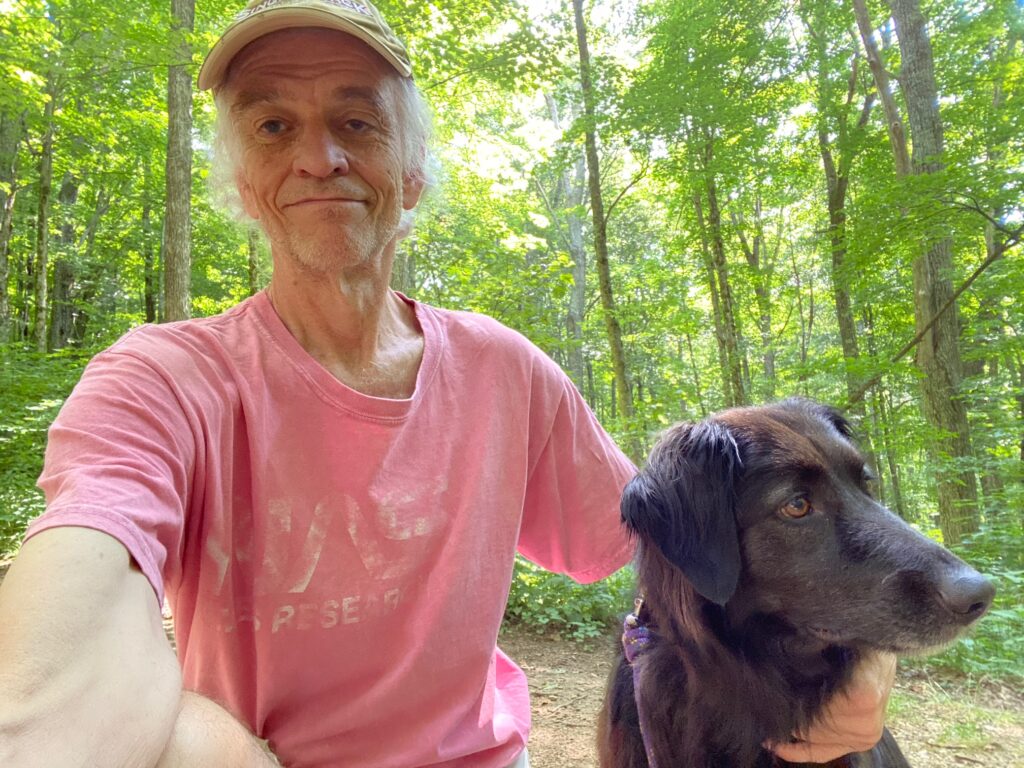
Dr. Phillip Chilson has studied and worked in the field of physics for most of his professional career. He received a Bachelor of Science degree in Physics (Magna Cum Laude) from Clemson University in 1985 and then spent one year working at a nuclear research facility in Germany on a Fulbright Scholarship (1985 – 1986). After returning to the US, Dr. Chilson went on to earn Master of Science and Doctor of Philosophy degrees in Physics from the University of Florida in 1990 and Clemson University in 1993, respectively. He has held positions at the Max-Planck Institut für Aeronomie in Germany (1994 – 1997), the Swedish Institute of Space Physics in Sweden (1997 – 2000), and the University of Colorado (2000 – 2004). Most recently he served as a Professor in the School of Meteorology at the University of Oklahoma and Director of the University’s Center for Autonomous Sensing and Sampling. While at the University of Oklahoma (2005 – 2021), Dr. Chilson pursued a wide variety of research topics, including investigations of the atmospheric boundary layer, aeroecology, the advancement of remote sensing technologies, and the development of unmanned aerial systems for atmospheric studies. Before joining the University of Oklahoma, Dr. Chilson also worked in solid-state physics, ultra-low temperature physics, and aeronomy.
Current Affiliation
In 2024, Dr. Chilson joined Sparv Embedded AB (https://sparvembedded.com/) in the role of Atmospheric Physicist and Customer Services. Through his affiliation with Sparv Embedded AB, Dr. Chilson continues pursuing his interests in meteorology, the atmospheric sciences, instrument development, and data analysis. Dr. Chilson has a passion for experimental atmospheric physics In his current position he is helping to develop and improve techniques and instrumentation to make high-quality observations of the atmosphere.
Previous Professional Experience
University of Oklahoma (OU) (USA)
Center Director: 2016 – 2021
- Founding Director of the University’s Center for Autonomous Sensing & Sampling (CASS).
- Led an interdisciplinary team of scientists and engineers on the development and implementation of novel autonomous solutions for environmental sampling, which leveraged OU’s excellence in weather research.
- Enabled expanded operations and growth of CASS through successful proposal development and interactions with federal and private business partners.
- Managed several research thrusts focused on improving weather forecasts and basic understanding of atmospheric and environmental processes.
- Dissemination of scientific and engineering knowledge through the publication of peer-reviewed journals and presentations and national and international conferences and symposia.
Professor of Meteorology: 2005 – 2021
- Conducted graduate and undergraduate courses in meteorology, environment and sustainability, and weather radar.
- Advised and provided funding for graduate students and postdocs as they pursue their research interests.
- Proposal development and project management (cumulative research funds amount to about $16.5M).
- Author and co-author books, publications, and proceedings (to date, there have been 91 publications, 2 books, and 76 conference proceedings).
- Promoted the department, college, and university through diverse service roles.
- Founding and continuing member of the Advanced Radar Research Center.
- Instrumental in establishing aeroecology and weather drone research at OU.
University of Colorado (USA)
Research Scientist: 2000 – 2004
- Conducted fundamental research related to the Earth’s atmospheric boundary layer (lowest 1-2 km of the atmosphere).
- Implemented novel hardware modifications and signal processing tools to improve the range resolution of atmospheric radars designed to operate in the atmospheric boundary layer.
- Worked with Vaisala Inc., an international weather company focusing on sensor development, on improvements to one of their radar systems.
- Helped develop frameworks for effective comparisons of different atmospheric remote sensing technologies.
Swedish Institute of Space Physics (Sweden)
Research Scientist: 1997 – 2000
- Provided scientific guidance for and evaluation of the Esrange MST (Mesosphere, Troposphere, Stratosphere) Radar, which was operated in support of scientific rocket launches at the site.
- Developed radar software automation packages and oversaw the data collection and analysis for the operations of the Esrange MST Radar.
- Led radar measurements at the European Incoherent Scatter (EISCAT) radar facility focused on studies of the Earth’s ionosphere.
- Appointed Docent (Associate Professor/Reader) in Atmospheric Physics at the Umeå University, Umeå, Sweden.
Max-Planck-Institut Für Aeronomie (Germany)
Max-Planck-Gesellschaft Postdoctoral Scientist: 1994 – 1997
- Implemented frequency-domain interferometry on the SOUSY MST (Mesosphere, Troposphere, Stratosphere) Radar to improve range resolution.
- Developed and implemented new methods to conduct meteor research with the SOUSY MST Radar.
- Conducted research of the Earth’s ionosphere using radar and lidar systems to better understand the dynamic and temperature structure of the atmosphere at altitudes of about 85 km above the surface.
Kernforschungsanlage (Germany)
Fulbright Scholar: 1985 – 1986
- Collaborated on a project to investigate the changes in the structural integrity of materials exposed to alpha radiation, which went into design considerations for fusion reactors.
- Fabricated and tested steel alloys from prescribed ratios of iron, nickel, and chromium.
- Participated in an in-depth, ten-week German training program in Regensburg and passed the assessment test required to attend a German university.
New Directions
In 2021, Dr. Chilson decided to take a bold step by leaving his position at the University of Oklahoma. This has allowed him to explore new dimensions of his professional career. In 2022, Dr. Chilson joined the Ronin Institute as a Research Scholar as means of connecting with a diverse, interdisciplinary, and international community of scholars to pursue a broader scope of research interests.
Moreover, Dr. Chilson has taken advantage of this time to deepen his own journey towards self-discovery and to begin sharing what he has learned along the way with others. In parallel with his work in physics and atmospheric research, Dr. Chilson has spent over 30 years exploring his own personal path of self-inquiry. As a physicist and research scientist, he has taken a pragmatic and evidence-based approach along the way. During this process, he has treated his own life as a living experiment while sorting and sifting through various ideologies and techniques that he has come across and applied to himself. Dr. Chilson has discovered some of the many methods that we can use to (re)condition our minds and to reinterpret our experiences in a way that allows us to reconcile the past and embrace the present with confidence and a sense of empowerment.
Dr. Chilson has become interested in the mind the mind-body connection and the role that the breath plays at the interface. He has begun studying and practicing the three pillars of breathing as described in the Oxygen Advantage program and is now an Advanced Instructor. Dr. Chilson has also founded and runs Body Breath Intelligence.